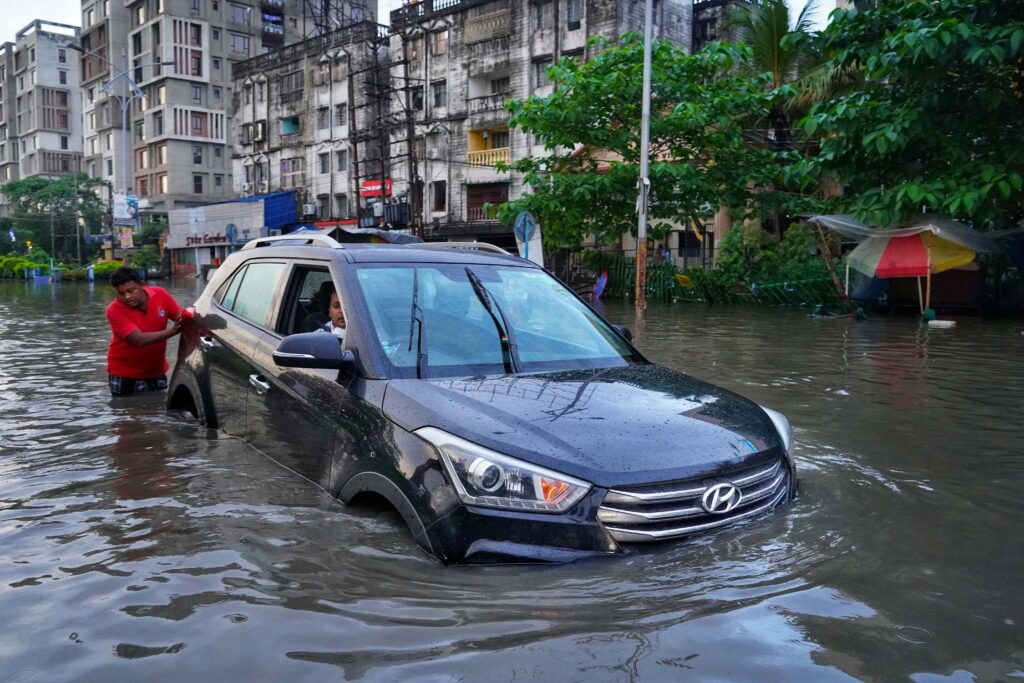
Every year, Guwahati suffers from sudden flash floods, even with short periods of rainfall, and it is only getting worse as the years pass by. It hinders the travel of commuters, disturbs their daily work, damages properties and infrastructure, and has even claimed lives on many occasions. We are therefore suggesting a few ideas that may help reduce the intensity of these flash floods.
1. Non-concrete open areas
The city needs more non-concrete natural open spaces with soil, grass, and trees, such as parks, wetlands, playgrounds, etc., in every locality where water can flow into and penetrate into the ground. Additionally, residential and commercial complexes should have more non-concrete spaces and should not cover land with concrete unless it is an absolute necessity. Instead of conventional road-building materials, construction should include the use of permeable materials that allow water to penetrate the ground instead of running off. Without natural open spaces or permeable materials, water accumulates on concrete or tar and results in flash floods. Allowing water to flow into the ground will also help replenish the groundwater.
2. Water Inlets
Bases of drainage walls or footpaths must have large vents to allow a faster flow of water from the roads into the drains to prevent waterlogging. Additionally, the dividers or any other concrete barriers, such as bases of flyovers, must have large enough vents at their bases to allow free flow of water from one side of the road to the other and allow an even distribution of water on both sides of the road and drainage systems to prevent creating water pools. These vents should have nets to prevent solid waste from flowing into the drains and causing blockage in the long run.
3. Levelled Drainage System
All roads and drains should be at the same elevation to prevent water from flowing from higher areas to lower areas to prevent flooding in the lower areas.
4. Flowing Drainage System
Currently, most of the drains do not allow the flow of water and function more like pits than actual drainage systems. Adding to the problem, blocked drains give rise to parasites and also contaminate logged water with disposed wastes and the parasites. These city drainage systems must be functional and must allow the flow of water into a final waste disposal unit to prevent waterlogging on the roads.
5. Underground Sewage Tunnels
The city needs a well-connected network of large underground drainage tunnels that can allow faster flow of large amounts of water out of the roads to a waste disposal facility.
6. Faster Waste Removal
It is often observed that after manual cleaning of the drainage systems, the waste from the drains is left on the sides of the roads for several days before it is removed from the roads. In the meantime, this waste dries up, and some amount gets into the drains again or adds to the dust on the streets. The situation worsens if it rains, as it washes the same waste into the drains and on the streets again. Also, it is extremely unhygienic to leave such toxic waste on public roads. Therefore, these wastes must be removed from the roads as soon as they are removed from the drains.
7. Penalties
Last but not least, at the administration level, strict laws must be made to impose penalties on unauthorised or illegal dumping of waste into the drains that causes blockage of drainage systems.